
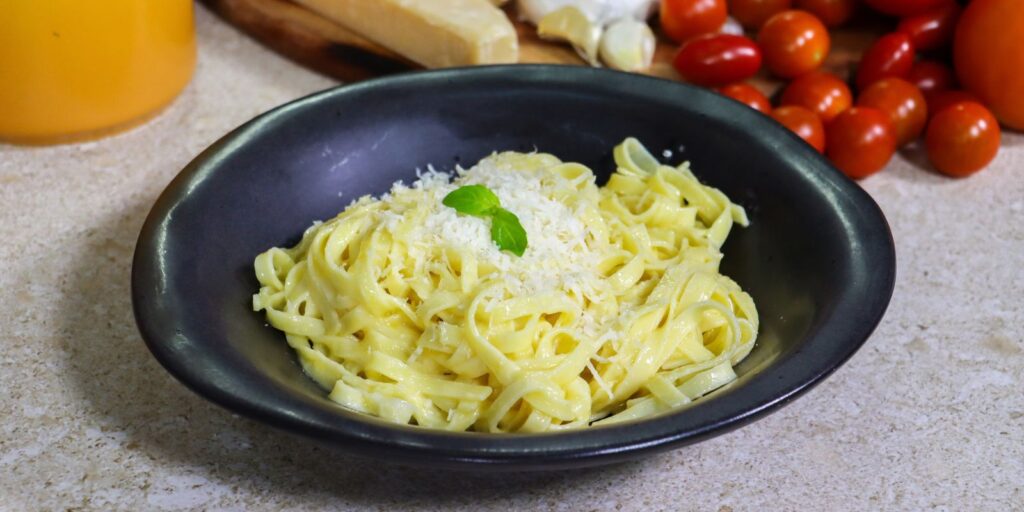
Culinary Hotline - The Art of Fresh Pasta with Carli from Italy at Your Door
From a handful of ingredients to a beautiful plate of pasta, made right at home.
Ingredients:
- 400g plain Italian 00 flour suitable for pasta, plus a little extra for dusting (plain cake flour can be used if unavailable)
- 4 large eggs (approximately 200g without shells)
- 1–2 tsp water, only if needed
How To Make Fresh Egg Pasta Dough
- Place the flour in a bowl or on a clean work surface. Make a broad well in the centre and add the eggs.
- Beat the eggs with a fork, gradually drawing flour in from the edges until a shaggy dough forms.
- Bring together by hand. If it will not hold together, add water 1 tsp at a time. If sticky, add a light dusting of flour rather than a large handful.
- Knead for 8–10 minutes until smooth, firm and supple. The dough should not stick to your hands.
- Wrap tightly and rest for 30 minutes at room temperature before rolling. For later preparation, refrigerate instead and allow to become pliable before rolling.
Ingredients:
- 1 batch rested fresh egg pasta dough from segment one
- About 50g fine semolina or extra flour, for dusting as needed
How To Make Hand-Rolled or Machine-Rolled Fettuccine and Farfalle
- Divide the dough into four pieces. Work with one piece at a time and keep the others covered.
- By hand: Lightly flour the surface and roll from the centre outwards, rotating the sheet until evenly thin, approximately 1mm or less. Dust sparingly as needed.
- By machine: Flatten a piece and pass through the widest setting. Fold into thirds and repeat two or three times until smooth. Continue through progressively narrower settings without further folding until approximately 1mm or less. Machine numbers vary; judge the sheet rather than relying on a particular setting.
- For fettuccine: Lightly dust the sheet. For hand cutting, loosely fold or roll it and cut into 6–8mm ribbons; unfurl promptly. Alternatively, pass the sheet through the fettuccine cutter attachment.
- Dust lightly with semolina and arrange in loose nests on a lined tray. Avoid tight piles or pressing ribbons together.
Shaping Farfalle
- Cut a separate sheet into rectangles about 4cm × 3cm. If very dry, moisten only the centre with a fingertip of water. Pinch the middle firmly to form a bow, keeping the centre thin enough to cook through.
- Arrange bows in one layer on a lightly dusted tray. Cook separately from ribbons and taste the pinched centre to check doneness.
Storage
- Use promptly for the best texture. For a short hold, cover and refrigerate dough or cut pasta; use within 24 hours. Keep cut pasta lightly dusted and loosely arranged so it does not clump.
- For longer storage, freeze ribbons in loose nests or shapes in a single layer on a lined tray until firm. Transfer to labelled airtight freezer bags and use within 1 month for best quality. Cook straight from frozen, allowing extra time and checking by tasting. Do not leave egg pasta out to dry overnight.
Ingredients:
- All the fresh fettuccine made from the 400g flour / 4-egg dough batch above (approximately 600g before dusting)
- 100g unsalted butter, softened and cut into small pieces
- 150g Parmigiano Reggiano, very finely grated, plus a little extra to serve if desired
- About 250ml reserved hot pasta water, added as needed
- Salt, for the cooking water and to taste
How To Make Authentic Butter and Parmigiano Fettuccine Alfredo
- Bring a large pot of water to a rolling boil and salt it lightly, bearing in mind the cheese is salty. Have warm plates ready.
- Add the fresh fettuccine, separate gently and cook until tender with a slight bite, usually 2–3 minutes depending on thickness. Start tasting early.
- Before draining, reserve at least 250ml cooking water. Place the butter and about 60ml hot pasta water in a wide warm pan and swirl until the butter melts. Avoid browning or boiling hard.
- Lift the cooked pasta into the pan with tongs. Toss to coat, then remove from direct heat.
- Add the finely grated cheese in small additions, tossing constantly and adding hot pasta water a splash at a time until a glossy sauce coats every ribbon. Use only as much water as needed.
- If the sauce tightens, add another splash of warm pasta water and toss. If watery, keep tossing gently as the cheese and starch bind it. Avoid strong heat once the cheese is added.
- Taste, adjust salt only if needed, and serve immediately on warm plates.
Recipe Note
- The creamy texture comes from butter, cheese and starchy cooking water; no cream is required. Use freshly and finely grated cheese for a smooth finish.